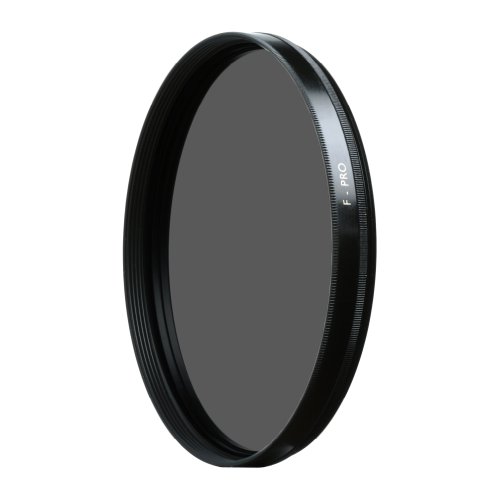
If you are looking for B+W 67mm Kaesemann Circular Polarizer with Multi-Resistant Coating review, you have visit the right place. why i asserted?Because in here you can find best review about B+W 67mm Kaesemann Circular Polarizer with Multi-Resistant Coating from real individuals who use it. There are several review relating to this product in internet but in here you can find right reason to purchase or otherwise not. we provide you with very accurate information about B+W 67mm Kaesemann Circular Polarizer with Multi-Resistant Coating when you have to know concerning this product like feature,positives and negatives. So Don't purchase this item before you read B+W 67mm Kaesemann Circular Polarizer with Multi-Resistant Coating review until finished.CHECK THIS OUT!

Product Details
- Size: 67mm
- Color: Black
- Brand: B&W
- Model: 66-045618
- Dimensions: .37" h x
2.73" w x
2.73" l,
.11 pounds
- Display size: 0
Features
- This filter uses our standard B+W F-Pro filter mount, which has a front accessory thread and is made of brass.
- MRC by B+W is not only an extraordinarily effective multiple layer coating.
- It is also harder than glass, so that it protects filters from scratches,
- And it is also water and dirt repellent, thus facilitating filter maintenance.
- Manufactured from Water-White Schott Glass
- MRC by B+W is not only an extraordinarily effective multiple layer coating, it is also harder than glass,
- Protects filters from scratches, and it is also water and dirt repellent, thus facilitating filter maintenance.
- This filter uses our standard B+W F-Pro filter mount, which has a front accessory thread and is made of brass.
- MRC by B+W is not only an extraordinarily effective multiple layer coating.
- It is also harder than glass, so that it protects filters from scratches,
- And it is also water and dirt repellent, thus facilitating filter maintenance.
- Manufactured from Water-White Schott Glass
- MRC by B+W is not only an extraordinarily effective multiple layer coating, it is also harder than glass,
- Protects filters from scratches, and it is also water and dirt repellent, thus facilitating filter maintenance.
Product Description
Circular polarizing filters are made for all cameras with beam splitters in the light paths of their TTL exposure meter and with autofocus lenses. Circular polarization has the same pictorial effect as linear polarization, but allows for proper exposure metering and/or autofocus distance settings. The "high-end" polarizing foils of the Käsemann-type filters are neutral in color, they have a higher efficiency than conventional polarizing foils and they are cemented between high-grade plane-parallel optical glass. The resulting sandwich is then precision-polished again to achieve highly accurate plane-parallel surfaces. Subsequently they are edge-sealed to protect the foil against humidity. Discriminating photographers regard the B+W Käsemann-Type Polarizing Filter to be the very best of all polarizing filters. They are well suited for applications that require the highest possible imaging quality, especially with high-speed telephoto lenses and apochromatic lenses.
Customer Reviews
Most helpful customer reviews
92 of 92 people found the following review helpful. Pricey But Worth Every Penny
By Avid Reviewer
I got the B+W 58mm Circular Polarizer MRC Filter a few months ago. I was so pleased with the results that when I got my Canon 17-55mm lens, I opted to go with a B+W again -- and B+W did not disappoint. This Käsemann filter works as claimed; it increases color saturation and reduces (and in some cases completely eliminates) reflection.This filter is a marvel of engineering. The build quality is simply top-notch (the filter is Made in Germany).This Filter vs A Non-Käsemann Filter------------------------------------I debated between this filter and the other B+W filter, the B+W 77mm Circular Polarizer MRC Filter. According to B+W (Schneider Optics), the Käsemann uses the same MRC (Multi-Resistant Coating) technology, but it's one-up on the non-Käsemann filter because it uses "high-end" polarizing foils. To quote Schneider Optics:"The \"high-end\" polarizing foils of the Käsemann-type filters are neutral in color, they have a higher efficiency than conventional polarizing foils and they are cemented between high-grade plano-parallel optical glass."Another advantage the Käsemann filter has over the non-Käsemann filter is that it is edge-sealed to protect the polarizing foil from humidity.Since the Käsemann filter is only a tad more expensive (as of this writing), the choice between the Käsemann and the non-Käsemann filter was a no-brainer for me.Tip---A common advice photographers give regarding filters is to pick a filter that fits the largest of your lenses so you can use the same filter for your smaller lenses as well (by using Step-Up Rings). Since step-up rings allow you to use this filter for your smaller lenses, this could be the only circular polarizer filter you need for *all* of your lenses with varying filter thread sizes (77mm, 72mm, 67mm, 62mm, 58mm, 55mm, 52mm, and 49mm).---If you have a high quality lens, you shouldn't scrimp on the filter because your pictures will be only as good as your lowest-quality lens component allow. This filter may be pricey, but it's well worth the money.
49 of 49 people found the following review helpful.A very high quality rock-solid durable circular polarizer filter! One of the very best!
By ƒůŽźŸ ωŬ≥ζŷ ♥☮♭♩♪♫♬♮☯☺♡✈
இ Fuzzy Wuzzy's Summary:ѾѾѾѾѾ Highly recommended with warm fuzzies!This is the third B+W Kaesemann Circular Polarizer that I own. They are expensive, but they are worth the extra cost, especially under adverse conditions outdoors where lots of dust, moisture, and temperature changes are prevalent. Unlike B+W's standard circular polarizers, which also have the Multi-Resistant Coating (MRC), these Kaesemann ("encased") filters have a better premium-grade polarizing foil and these are completely edge-sealed for maximum durability under extreme climatic conditions due to changes in temperature and humidity. Since circular polarizers are mainly useful during mid-day outdoor shooting, and because I do a lot of backcountry nature and landscape photography that often involves many hours of daily hiking, I always purchase these B+W Kaesemann filters because they are one of the very best for outdoor shooting in environments ranging from hot and humid rain forests to below-freezing climates while hiking above timberline on a snow-covered mountain.For mid-day outdoor shooting, this filter will add a huge "WOW!" factor to your photos. In fact, a circular polarizer adds more obvious visual benefits than any other kind of lens filter that you may use. Colors really sparkle, especially on landscape shots where the reds, blues, and greens really pop compared to photographing outside in the mid-day sun without using a circular polarizer. Circular polarizers remove specular reflections caused by sunlight bouncing off of surfaces and they enhance the saturation of colors in your photos. So when colors are being desaturated by some degree of specular reflection, the colors will be enhanced. Not all scenes contain polarized light, but usually your skies will look more blue, the plants will look more green because the foliage is not reflecting light, and flowers will look prettier. Yes, you can increase color saturation using post-processing software. But this circular polarizer naturally adds saturation to the colors. And some people over-saturate the colors during post-processing. Along with getting richer colors in bright sunlight, a circular polarizer can also dramatically filter out the glare and reflections that are bouncing off of water and glass, allowing you to photograph through the water and glass to see more of the stones and fish below the surface of a lake or the objects that are behind a window on a sunny day. This can have a startling effect: for example, without using a CP filter, you may just photograph a reflection of yourself holding the camera pointed at a storefront window because most of the sunlight is causing the window to look like a reflective mirror; using a CP filter, you can photograph all of the items that are actually on display behind the storefront window.If you want to use a polarizing filter and your SLR camera was purchased during the past 30 years, you should probably use a "circular polarizer" instead of a "linear polarizer". Linear polarizer filters interfere with the beam-splitting metering that is used in most modern SLR cameras, resulting in underexposure.Unlike other stationary filters that do not move after you screw them onto a lens, a circular polarizer filter has a rotating lens element that filters light to different degrees of polarization. To use a circular polarizer, you just rotate this filter in either direction while looking through the viewfinder until you like what you see as being the best adjustment. If you are using a wide-angle lens and pointing the SLR camera at a landscape scenery shot, as you rotate the CP filter, and depending upon where the sun is, you may see the color of the sky slowly shift from lighter blues to darker blues as you rotate the CP filter. If it is early morning or late afternoon and the sun is at a sharp angle closer to the horizon, you may not see much of a difference as you rotate the filter ring. I personally prefer a light to medium amount of polarization from my CP filter use; this is somewhat analogous to wearing light-tinted or medium-tinted polarizing sunglasses. It is possible to get a deeply-colored dark blue sky by turning the CP filter to maximum polarization, but this can often look too unnatural. There may be situations where I have resort to maximizing polarization because the landscape still has too much glare, such as too many glistening reflections coming from a lake in the foreground of the landscape scene. If you are photographing a snowy landscape in the mid-day sun, you should try photographing both with and without using the CP filter. The CP filter will improve the look of the sky, water, and plants in a snowy landscape, but it may also remove the sparkling glitter effect of the snow, which may either enhance or detract from your photo.The brass filter mount is very rigid, and unlike some filters with aluminum filter mounts that can bind and be a hassle to screw or unscrew, this B+W Kaesemann CP filter is easy to put on and take off. Because I am sometimes repeatedly going outdoors, indoors, and then outdoors again and wanting to photograph both inside and outside, especially while touring foreign countries (e.g. photograph around the outside of a building using the CP filter and then photograph the inside of the building without the CP filter), I do not like to screw this filter too tightly because I want to be able to quickly put it on and quickly take it off as needed. So I just use a very light amount of torque when I screw the filter on, and I stop turning the threaded filter on the camera lens the moment that it no longer continues to easily screw in. Even though I can rotate this filter clockwise or counterclockwise to adjust the desired effect, I always rotate the filter ring clockwise (which looks like a counterclockwise turn when viewed from the perspective of looking through the viewfinder) as added insurance just in case my fingers are also grabbing the filter mount so that I am not inadvertently unscrewing the filter from the lens if I was to rotate the filter ring counterclockwise.Compared to cleaning the glass on lenses and other lens filters, I think that something about this B+W filter's "multi-resistant coating" makes it a bit more prone to smearing and streaking when cleaning with fluids. If there is dust on this filter or on my lens, a few good blasts from my Giottos Rocket Air blows the dust off. But if there is more stubborn dirt or fingerprints on this CP filter that requires wiping, the surface of this CP filter can be a bit finicky in getting both sides of the filter totally free of any smears or streaks. To remove fingerprints or dirt, I use a microfiber cloth or lens tissue dampened with isopropyl/rubbing alcohol or water, I lightly wipe in a circular motion, and then I quickly dry off the fluid using another clean cloth or tissue. It seems that some of the fluid can streak if it is left to dry by itself on the surface of the CP filter. Sometimes, I am still left with a few streaks on the filter glass, and if I clean that area again, I can wipe off the streaks. Because these B+W Kaesemann CP filters are more of a hassle to perfectly clean compared to other filters, I really try to avoid getting my fingerprints onto its surface, and I always remove the lens hood when using my fingers to turn the filter ring. Some people leave the lens hood on the lens and reach their fingers down into the hood to turn the CP filter, but that increases the risk of touching the CP filter's surface and getting fingerprints onto it.If you are using this circular polarizer with a wide-angle lens (e.g. about 25mm to 28mm or wider) or fisheye lens, since the angle of polarization varies continuously with the angle from the sun, and wide-angle and fisheye lenses can cover such a huge field of view, there is a possibility that you may end up with a sky that is unevenly polarized, and the sky will have a strange gradation of colors ranging from dark navy blue to pale light blue. The sky will be the darkest at a 90 degree angle from the direction of the sunlight. When using a lens that covers a very wide angle of view, the direction of the sunlight changes across the scene, resulting in varying degrees of polarization. This transition of sky colors may happen laterally, vertically, or diagonally. If this color banding is very severe, you can sometimes see this uneven polarization through the viewfinder and attenuate the effect somewhat by turning the circular polarizer. But at other times, you may not notice this uneven polarization while looking through the viewfinder. The shifting sky colors may become obvious if you review the photo on the camera's LCD screen, but if you are shooting during mid-day and the LCD screen has a lot of glare, you may still not notice this problem until you look at the photos later on the computer screen. This odd-looking shift of blue colors in the sky can be evened out a bit using some creative post-processing, but this is mainly an issue with wide-angle lenses, and it may become very obvious when using ultra-wide-angle lenses or fisheye lenses.Also remember that all circular polarizers lose at least one or two stops of light exposure, like using a neutral density filter, and details in shadow areas will be diminished, so you should not use this filter when shooting in conditions of low light, overcast skies, and indoor environments (which would not be helped by this filter anyway).
80 of 85 people found the following review helpful.Go with the best
By G. Wagstaff
Hands down the best polarizer I've ever used. Very solid construction and outstanding glass.Why spend thousands, or even hundreds for that matter, on a lens and then stick a sub-standard piece of glass on the front. That makes absolutely no sense to me at all. Your image is only going to be as good as your weakest link. And a shoddy filter is a weak link indeed.You really do get what you pay for and this is no exception. It may seem a bit pricey but it could very well be the last one you'll ever have to buy...just make sure you get one that fits your largest lens and step down from there.

CERTAIN CONTENT THAT APPEARS ON THIS SITE COMES FROM AMAZON SERVICES LLC. THIS CONTENT IS PROVIDED "AS IS" AND IS SUBJECT TO CHANGE OR REMOVAL AT ANY TIME.
Käsemann Circular Polarizers - The Highest Quality Polarizer Available The images on the left was taken without any filter. The image on the right was taken using a ...
B+W 67mm XS-Pro Kaesemann Circular Polarizer with Multi-Resistant ...
Käsemann Circular Polarizers - The Highest Quality Polarizer Available The images on the left was taken without any filter. The image on the right was taken using a ...
Polarizing| B&H Photo Video
High Efficiency Kaesemann Foils; MRC Multi-Resistant Coating; Rugged Brass Filter Ring; ... 67mm Circular Polarizer Glass Filter. B&H # HOCP67; Mfr # B67CRPL; In Stock.
B+W Kaesemann Circular Polarizing Multi-Resistant Coated Filter ...
B+W Kaesemann Circular Polarizing Multi-Resistant Coated Filter. ... Multi-Resistant Coating. Multi-resistant Coatings (MRC) is B+W latest coating lens coating system
B+W 67mm Kaesemann XS-Pro Circular Polarizer MRC Nano 66-1066398
The B+W 67mm Kaesemann XS-Pro Circular Polarizer MRC Nano Filter helps to reduce ... Multi-Resistant Coating offers both protection to the glass and ...
B + W 67mm Kaesemann Circular Polarizer MRC Filter 66-025834
About this item. B&W Kaeseman Circular Polarizer Multi-Resistant Coating (MRC) Slim Glass filters are constructed from specially selected polarizer foils with ...
Choosing between 3 B+W Circular Polarizers, Nano Coating worth it ...
I am trying to choose between 3 polarizers that B+W makes. B+W 67mm Kaesemann Circular Polarizer with Multi-Resistant Coating B+W 67mm XS-Pro Kaesemann Circular ...
B+W v. Hoya Polarizing filter? - Photo.net Accessories - Filters ...
B + W 67mm Kaesemann Circular Polarizer Filter in ... B+W MRC are an absolute dream. That coating is specifically ... one of the B+W "MRC" (multi-resistant coating) ...
B-W-77mm-Circular-Polarizer-Multi-Resistant-Coating- | eBay
Find best value and selection for your B-W-77mm-Circular-Polarizer-Multi-Resistant-Coating ... Newly listed B+W 67mm XS-Pro Kaesemann Circular Polarizer with Multi ...
B+W 77mm Kaesemann Circular Polarizer with Multi-Resistant Coating ...
B+W 77mm Kaesemann Circular Polarizer with Multi-Resistant Coating: Amazon.ca: Electronics ... B+W 67mm Kaesemann Circular Polarizer with Multi-Resistant Coating .

Rating: 100% based on 99998 ratings. 5 user reviews.
Ditulis Oleh 11:24 AM
0 comments:
Post a Comment